CMS

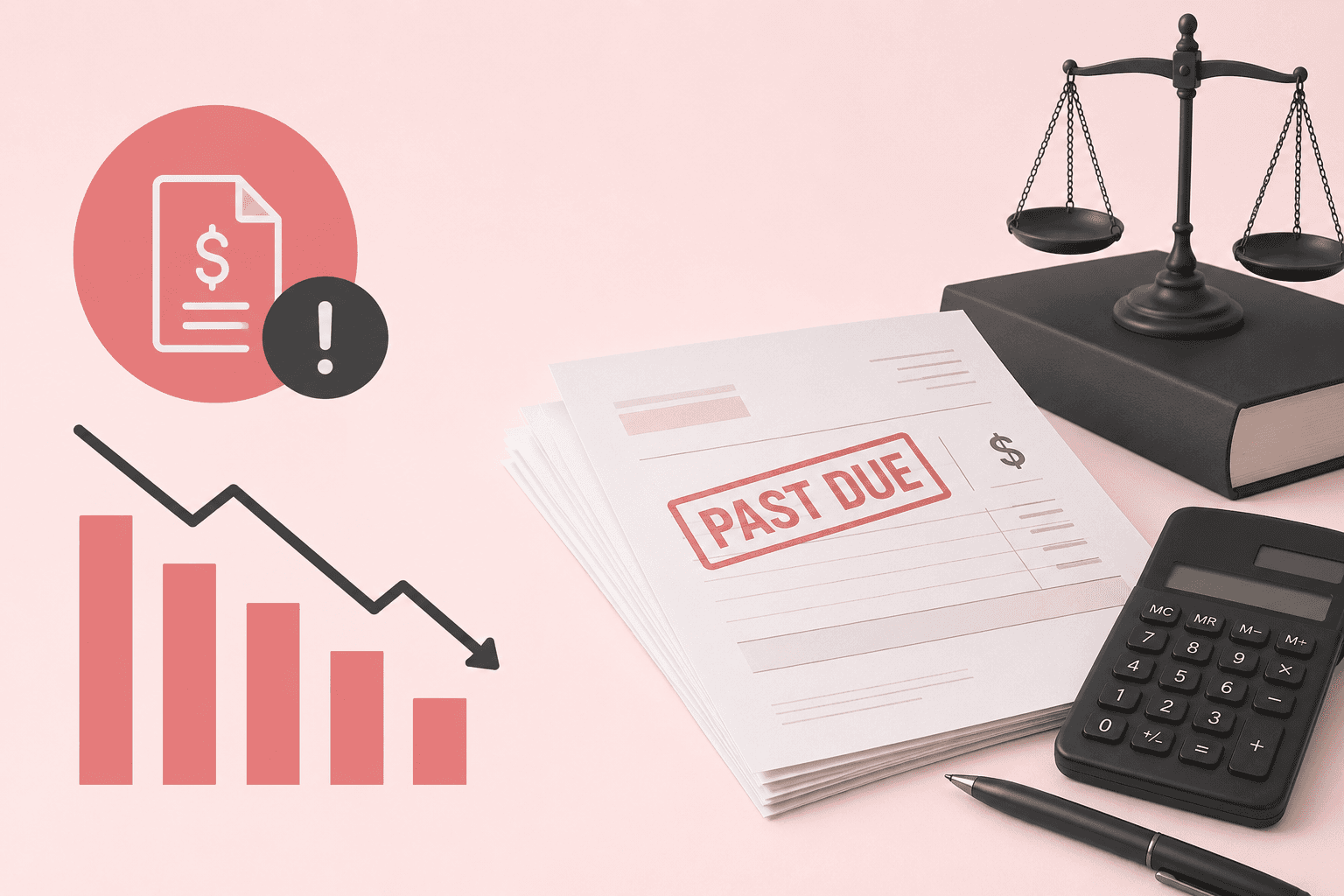
Accounts receivable is a challenge in every legal practice but family law firms face it differently. Clients arrive in emotional distress, often unprepared for what litigation truly costs. Retainers get exhausted faster than expected. Replenishment requests go ignored. And by the time a case closes, some firms are carrying tens of thousands of dollars in uncollected fees.
The data reflects this: according to industry surveys, family law practices consistently report higher write-off rates than most other practice areas. The reasons are understandable but the financial damage is real. This post examines why the AR problem runs so deep in family law and what firms can do about it.
Why Family Law AR Is Different
Unlike corporate or transactional clients who budget for legal fees, family law clients are often in crisis mode. They retain an attorney hoping the process will be short. When it isn't, the financial and emotional weight of the case, combined with the costs, can cause clients to disengage, dispute bills, or simply stop paying.
A few dynamics unique to family law make this worse: fee disputes frequently arise mid-case, when withdrawing representation is complicated by court schedules and client vulnerability; clients may become hostile toward their attorney as a way of processing broader frustrations with the legal system; and in high-conflict cases, one party may deliberately delay proceedings, running up the other party's fees as a litigation tactic.
The Retainer Trap: Setting Expectations That Stick
Most firms require an upfront retainer, but the initial amount is often set too low, either to stay competitive or because the attorney underestimates the case complexity. When the retainer runs out, replenishment requests create friction.
Best practice: set the initial retainer based on a realistic worst-case scenario, not an optimistic one. Communicate in writing, at the outset, that the retainer is not a cap, instead treat it like a deposit against ongoing fees. Include language in your engagement letter that explicitly addresses replenishment obligations and what happens if the account runs to zero.
Some firms have moved to tiered retainer structures: a base retainer for initial pleadings and discovery, with a secondary retainer triggered at key case milestones. This approach gives clients a clearer picture of the total cost arc and reduces the shock of mid-case replenishment requests.
Billing Frequency and Transparency
Clients who receive infrequent bills, monthly or worse, upon request, are far more likely to dispute charges than those who receive regular, itemized invoices. When two or three months of fees land in a single statement, the total amount feels disconnected from the work performed.
High-performing family law firms typically bill every two weeks. More importantly, they ensure invoices are readable: short narrative descriptions, clear time entries, and no surprise charges. When a client can follow the logic of a bill whether it was for, depositions, motion drafting, correspondence, they are far less likely to dispute it.
Portal-based billing, where clients can view their running balance and invoice history at any time, has also reduced AR friction for many firms. Transparency reduces resentment.
Addressing Non-Payment Before It Becomes a Crisis
The single most common AR mistake in family law: waiting too long to have the conversation. By the time a firm considers withdrawal, the unpaid balance has grown to a point where collection is unlikely and the client relationship is adversarial.
Establish internal triggers. When an account reaches a defined threshold—whether that's 30 days overdue or a balance exceeding a set dollar amount, a protocol should kick in automatically, such as a call from a partner, a payment plan discussion, and a clear timeline. Do not leave this to the billing administrator alone.
Payment plans, when structured well, recover more fees than collection agencies and preserve the relationship. A signed payment plan agreement with specifying amounts, due dates, and consequences for default, also protects the firm legally if collection eventually becomes necessary.
Systemic Fixes: What Leading Firms Are Doing
The firms that manage AR most effectively in family law have moved away from reactive collection and toward proactive systems. A few patterns stand out:
Credit card authorization on file that is obtained at the time of engagement, dramatically reduces late payment.
Regular financial check-ins with clients (not just billing notices) normalize the conversation about cost and reduce surprise.
Clear withdrawal policies, outlined in the engagement letter and discussed at intake, give clients a realistic picture of what non-payment means for their representation.
Dedicated intake screening for financial capacity, although sensitive, can help identify clients who may need alternative fee arrangements or referrals to legal aid before the engagement begins.
None of these are radical changes. But implemented together, they shift the culture from chasing payment to building financial accountability into the client relationship from day one.
The Bottom Line
It might be surprising but family law AR problems are not inevitable. They are, in large part, the result of unclear expectations set at intake, infrequent billing, and a reluctance to address non-payment directly. Firms that fix these upstream problems collect more, write off less, and counterintuitively, tend to have stronger client relationships.
If your firm is carrying a significant unpaid balance, the best time to implement these systems was six months ago. The second best time is now.

" height="16.57165px" id="usoExa717" transform="translate(1 2)" width="18.33337px"/></svg>)
" height="19.996073000000003px" id="slKA4m0c7" transform="translate(0 0)" width="19.9883px"/><path d="M 5.137 0 C 2.301 0 0 2.301 0 5.137 C 0 7.973 2.301 10.273 5.137 10.273 C 7.973 10.273 10.273 7.973 10.273 5.137 C 10.273 2.301 7.973 0 5.137 0 Z M 5.137 8.469 C 3.297 8.469 1.805 6.977 1.805 5.137 C 1.805 3.297 3.297 1.805 5.137 1.805 C 6.977 1.805 8.469 3.297 8.469 5.137 C 8.469 6.977 6.977 8.469 5.137 8.469 Z" fill="rgb(232, 124, 124)" height="10.273390000000001px" id="QoooNkCCR" transform="translate(4.863 4.863)" width="10.27342px"/><path d="M 2.399 1.199 C 2.399 1.863 1.859 2.398 1.199 2.398 C 0.535 2.398 0 1.859 0 1.199 C 0 0.535 0.539 0 1.199 0 C 1.859 0 2.399 0.539 2.399 1.199 Z" fill="rgb(232, 124, 124)" height="2.3984400000000003px" id="QF02FX4CF" transform="translate(14.141 3.461)" width="2.398500000000002px"/></g></svg>)
" height="19.999972999999997px" id="cGbUHvSUM" transform="translate(0 0)" width="20px"/></g></svg>)